
Ritual
Composing an Evening Ritual
Evening is when skincare becomes architecture. The morning may favour speed; the night invites sequence — layers chosen with intent, textures that reward patience, a closing gesture that marks the day complete. To compose an evening ritual is not to follow a universal script. It is to recognise which register the night asks for — recovery’s cushion, radiance’s quiet light, firmness as poise, clarity as refined calm — and to build only as many rooms as the evening can honestly hold.

An evening ritual is composition, not instruction.
Night is not a longer morning. It is a different climate for texture.
The evening register
Evening textures differ from morning ones by rhythm, not hierarchy. Where morning might favour a light essence and a single serum, evening opens space for replenishment: a comforting cream, a mask that stays while you read, a slower serum that settles as you sleep. FIONÉE designs AURÉLIS with this register in mind — formulas that belong to the later hours. The register is sensorial before it is strategic. Cooler essences may still open the night, but the house expects the middle and the close to take more time — glide that does not hurry, cushion that is allowed to remain, a finish judged under lamp light rather than daylight haste.
Recovery atmosphere — the quiet textures and slower pacing of evening.
Architectural thinking
To compose an evening ritual is to think in structure: preparation, delivery, closure. Preparation might be a gentle cleanse and an essence that readies the surface. Delivery introduces serums or concentrates chosen for the concern of the moment — recovery on tired skin, radiance before an occasion. Closure seals with cream or mask. The architecture is flexible; the intelligence is in knowing which room to enter. Architecture also implies load-bearing limits. Three considered textures often hold more meaning than six anxious ones. The house prefers a plan that still has air — spaces between layers, a refusal to fill every available minute with product.
Choosing a concern for the night
The four AURÉLIS concerns — radiance, recovery, firmness, clarity — are vocabularies for evening choice, not obligations to rotate. Some nights ask only for comfort. Others want a pearlescent close before sleep. Firmness, understood as appearance and poise, may belong to an evening when the surface feels slack in look rather than in anatomy. Clarity may suit nights when evenness of tone is the quiet wish — cosmetic evenness, never a treatment narrative. The Ritual Composer offers pairings as editorial suggestions. The composition remains yours: one primary concern, textures that serve it, and the humility to leave the other pathways for another night.
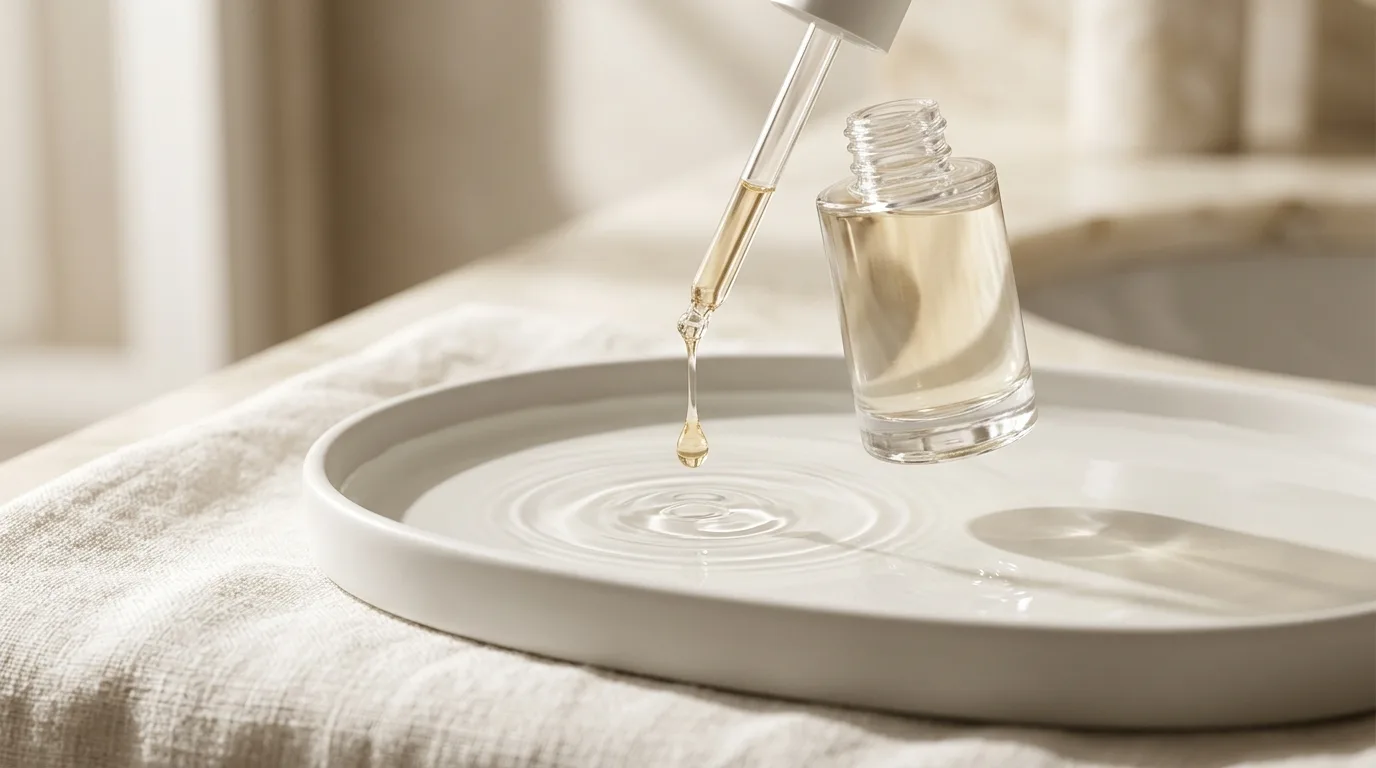
Radiance may close an evening — light returned before rest.
Pacing and pause
An evening ritual gains meaning from pacing. Rushed application defeats the purpose. FIONÉE recommends unhurried strokes, attention to neck and décolletage where a formula belongs there, a pause between layers when time allows. The Ritual Composer suggests pairings; the tempo remains yours. Intelligence, here, is restraint — including the wisdom to stop before over-layering. A pause is not empty time. It is how a serum settles, how a cream decides whether it needs a second pass, how the evening remembers it was cared for rather than managed. Without pause, even beautiful textures become noise.
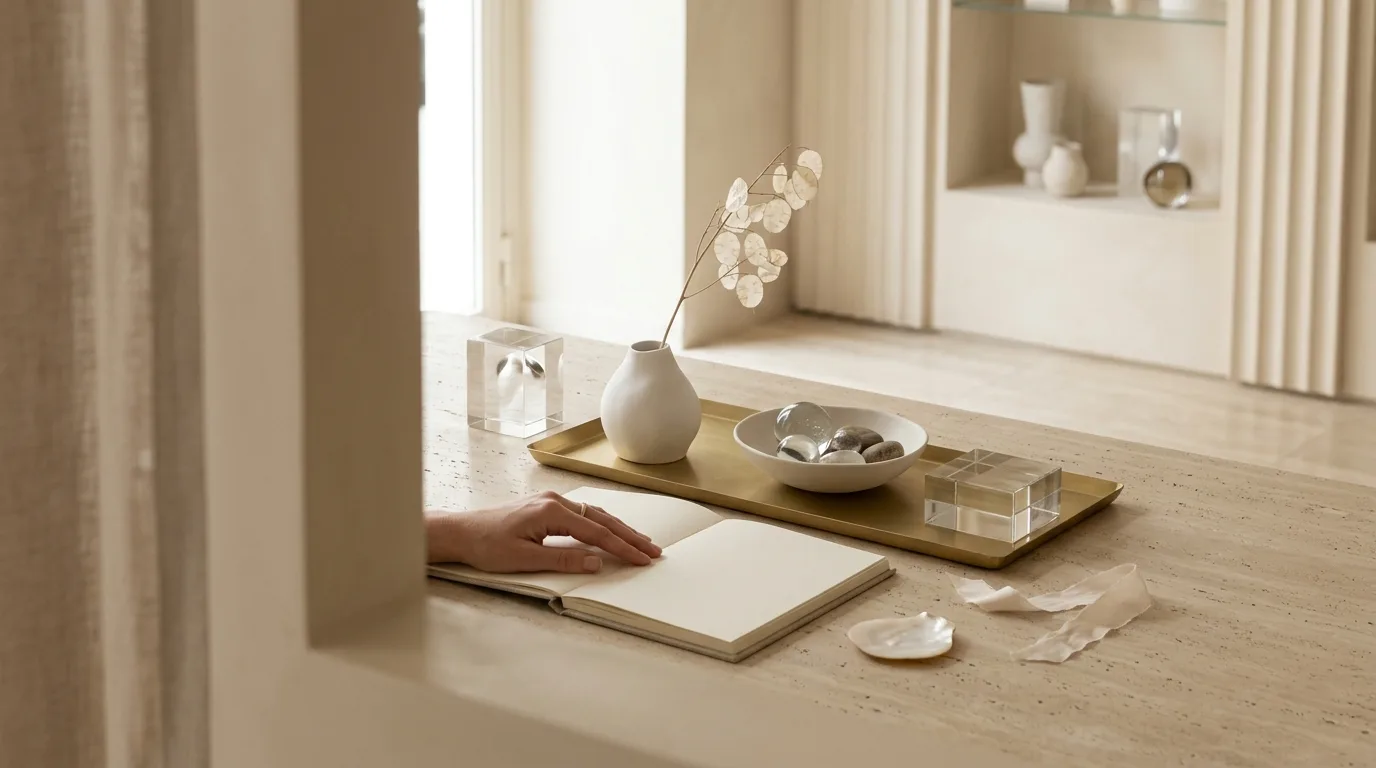
Maison evening climate — fewer objects, quieter light, room for a short ritual to feel complete.
Morning as counterpoint
Evening rituals gain definition against morning brevity. Where morning may be essence and sunscreen, evening allows mask and cream — the luxury of time expressed through texture rather than quantity. FIONÉE does not prescribe this contrast; it formulates for it, offering lighter textures for early hours and slower ones for night. Counterpoint keeps both registers honest. An evening that merely repeats the morning with more steps is not composition; it is prolongation. The house prefers difference: day as clarity of motion, night as depth of finish.
Mask as punctuation
A mask is punctuation in an evening sequence — a full stop before sleep, a texture that stays while attention moves elsewhere. Within AURÉLIS, masks belong to recovery and radiance pathways equally: comforting cushion or pearlescent preparation, depending on the evening's intent. Punctuation implies rarity as well as presence. Not every night needs a mask. When one appears, it should change the sentence — marking a slower evening, a travel return, a Sunday that refuses hurry — rather than becoming another unchecked box. Afterward, a light cream or nothing further may be enough. The point of punctuation is that the line can end.
Objects that serve the tempo
Composition extends to the objects at hand. A dropper that meters without fuss, a jar that opens without theatre, a sachet that does not turn the bathroom into a laboratory — these details keep evening intelligent. FIONÉE designs for rituals that can live beside a lamp and a book, not only beside a mirror. If the tools demand concentration that belongs to work rather than care, the tempo breaks. Sensoriality and architecture meet here: the vessel should invite the same pacing the formula was written for.
Beyond the how-to
This is not a beginner's guide. It assumes familiarity with skincare and offers editorial orientation instead. The four concerns provide vocabulary for choosing an evening sequence. No step is mandatory. No outcome is promised. The ritual exists for the pleasure of attention, the culture of texture, and the quiet close of day. Guides multiply steps to feel useful; editorials subtract until the remaining gestures feel inevitable. FIONÉE sides with the latter. If an evening needs a diagram to be performed, it has already left the house register.
Enough, then stop
The most intelligent evening gesture is often the last one you do not add. FIONÉE’s discipline of restraint belongs here as much as in the Atelier: a cream that closes, a mask that punctuates, then the room can dim. Over-layering is a kind of noise. The house prefers a sequence that still has air in it — so the textures can be felt, and so sleep is not preceded by a second ritual of correction. Stopping is not neglect. It is the final compositional choice: the recognition that the surface has been given what the evening asked, and that prestige includes the grace of leaving well enough alone.