
Formulation
Peptides in Cosmetic Skincare
Peptides appear frequently on ingredient lists — often accompanied by language that exceeds what cosmetic law and honest formulation allow. At FIONÉE, peptides are considered ingredients of interest, not overclaimed actives. This essay offers clarity without exaggeration: what peptides are in plain terms, how they may sit inside a composed formula, and where the house draws a firm line. The aim is orientation, not recruitment. A reader should leave better able to meet a label with intelligence — and less willing to accept drama dressed as science.
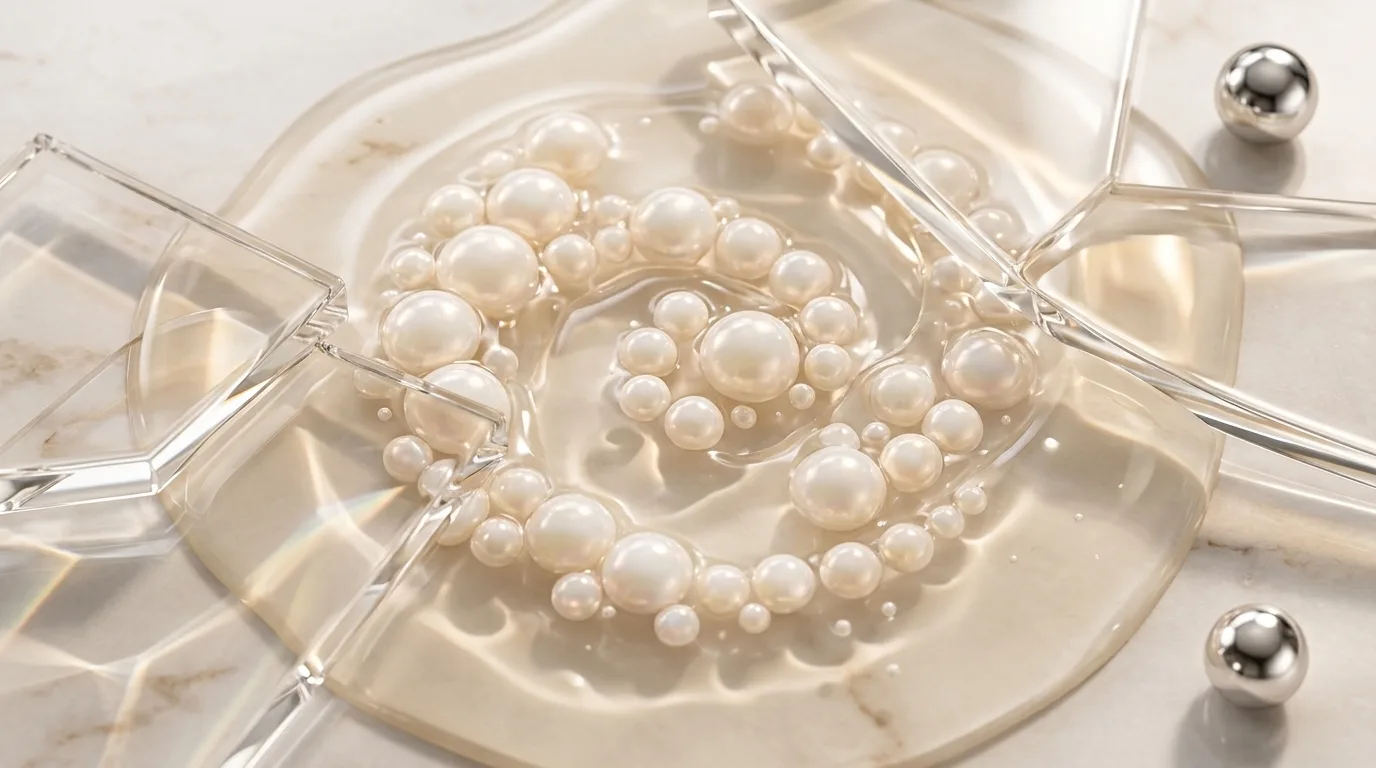
Peptides belong to cosmetic conversation — not to clinical promise.
What peptides are
Peptides are short chains of amino acids — building blocks that appear naturally in the body and can be synthesised for use in cosmetic formulas. In skincare, they are included for their role in contemporary formulation: supporting the sensorial and appearance-oriented goals of a serum or cream. They are not drugs, and cosmetic products do not treat disease. That distinction is not a footnote. It is the frame that keeps this conversation honest. When marketing borrows the tone of a prescription, it asks a cosmetic ingredient to carry a weight it is not authorised — and often not able — to hold. FIONÉE prefers a smaller, sturdier sentence: peptides may form part of a formula designed to improve how skin looks and feels with daily use.
Peptide as material — the macro language of ingredient craft.
How they appear in formulas
In AURÉLIS and across FIONÉE, peptides may appear alongside humectants, botanical extracts and emollients — each contributing to texture, finish and the overall experience of application. FIONÉE does not publish ingredient percentages or make comparative efficacy claims. The Atelier selects actives for fit within a formula’s architecture, not for label theatre. A peptide that disrupts glide, pills under a cream, or forces the finish into glare has failed the house’s first test, whatever contemporary conversation surrounds it. Appearance on an INCI list is not the same as belonging. Belonging means the material can live inside a ritual without asking every other step to compensate.
The culture around the word
Peptide has become a cultural keyword as much as a materials category. It signals modernity, seriousness, a certain laboratory adjacency — and that cultural charge is precisely where overclaim begins. Brands reach for physiological stories because the word invites them. FIONÉE declines the invitation. The house will describe peptides as part of contemporary cosmetic craft: materials considered for how they sit in an emulsion, how they coexist with hydration systems, how they leave skin feeling after application. It will not narrate drug-like mechanisms, anatomical change, or outcomes that belong to medical contexts. Culture can be acknowledged without being obeyed. The word stays; the costume does not.
What we do not claim
FIONÉE does not claim that peptides alter collagen behaviour, lift skin anatomically, or produce clinical outcomes. No before-and-after narratives, no drug-like mechanisms, no promised results. Peptides are part of cosmetic skincare — formulas designed to improve the appearance and feel of skin through daily use, not to alter physiology. The house also declines adjacent theatre: percentages offered as proof, comparative ranking against unnamed formulas, and language that treats a serum as a procedure. What remains is sufficient. Skin may look more refined, feel more comfortable, receive light more evenly when a well-made formula is used with attention. Those are cosmetic sentences. They are the ones FIONÉE will keep.

Radiance formula atmosphere — where peptides may sit within a composed ritual.
Peptides within AURÉLIS
Within the AURÉLIS preview, peptides may appear in radiance-oriented serums and creams where contemporary formulation calls for them. Their presence signals attention to current skincare culture — not a guarantee of outcome. The Atelier evaluates peptides as one material among many: alongside humectants that support hydration, emollients that shape finish, and textures that determine whether a formula is returned to each morning. If a radiance pairing feels right, it will be because the whole architecture works — preparation, glide, close — not because a single name on the list has been asked to carry the ritual. AURÉLIS keeps peptides in proportion to the chapter they inhabit.
Read for context, not conquest — the label is a map, not a verdict.
Reading an ingredient list with intelligence
An informed consumer reads for context, not conquest. Peptides on a label indicate formulation intent — a serum designed with contemporary actives in mind. The question is not whether they work in studies FIONÉE has not conducted, but whether the formula feels right, fits a ritual, and respects cosmetic boundaries. Position on a list, surrounding materials, and the finish in the hand matter more than a single keyword. Intelligence also means recognising marketing gravity when it appears: words that sound medical, promises that sound procedural, urgency that sounds unlike care. The FIONÉE frame asks the reader to keep authority with experience — how skin looks and feels over ordinary weeks — rather than surrendering it to a paragraph that cannot be verified from the bottle alone.
Sensorial fit before label theatre
A peptide serum still has to live on the skin. Finish, glide and the moment of disappearance matter as much as the name on the INCI. FIONÉE will not ask a peptide to compensate for a texture that pills, drags or shines without composure. If the material does not earn its place in the hand, it does not earn its place in AURÉLIS — whatever contemporary conversation surrounds it. Sensorial fit is not anti-science. It is the consumer-facing half of formulation honesty: the half the visitor can actually judge. Label theatre asks for faith in absent evidence. Texture asks for attention. The house prefers the latter, and builds formulas accordingly.
Hydration systems beside actives — architecture before a single keyword.
A modest place in the house
Peptides are one room in a larger maison. Hydration, barrier-conscious comfort, radiance as appearance, clarity without harshness — these remain the editorial concerns. Ingredient intelligence exists to orient, not to recruit. The Journal will keep returning to this discipline: speak clearly, claim less, and let daily use decide whether a formula is kept. Modesty here is not timidity. It is confidence that a beauty maison does not need borrowed medical stature to feel serious. Seriousness, for FIONÉE, is precision of language, care in texture, and the refusal to ask any ingredient — peptide included — to promise what a cosmetic product cannot honestly promise.
How to keep the conversation useful
A useful peptide conversation ends where daily life begins. Ask whether the formula fits the hour you actually have. Ask whether the finish leaves skin looking composed under ordinary light. Ask whether the language on the page stays inside appearance and feel. If those answers are clear, the keyword has done enough work. If they are not, no amount of contemporary prestige around the word will repair the mismatch. FIONÉE writes this essay so the visitor can hold that standard without becoming cynical — curious about materials, exact about claims, and loyal first to the ritual that still feels like care after the novelty of a name has faded.