
Formulation
Texture as Formulation
Formulation is often discussed in terms of actives. At FIONÉE, it is discussed in terms of touch — because how a product feels on skin determines whether it earns a place in a daily ritual, regardless of what the label lists. Texture is architecture: viscosity, slip, absorption, finish. It decides whether a sequence has rhythm or merely accumulation. The Atelier treats these qualities as primary composition, not as packaging for an ingredient story. A formula that fails in the hand will not be rescued by eloquence on the page.
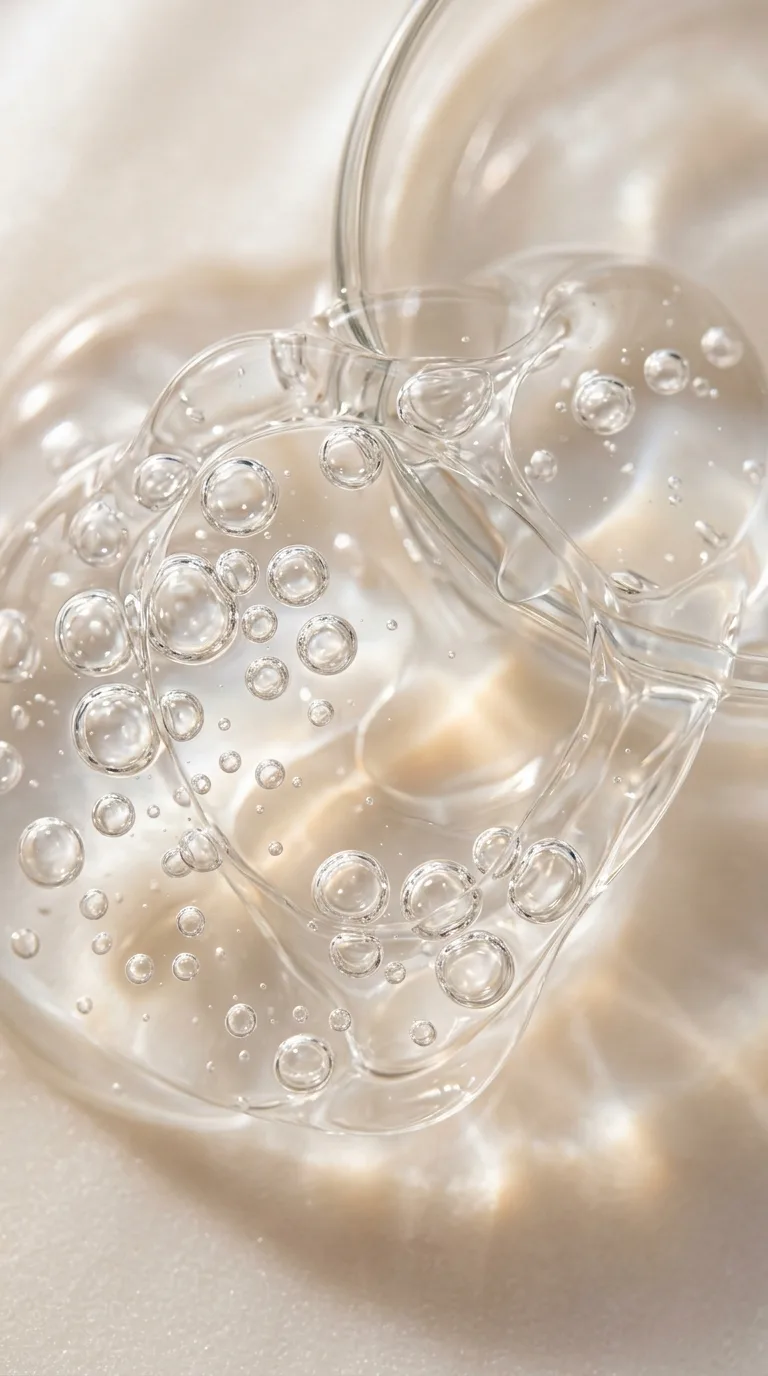
Texture is the first verdict — and the last.
The architecture of touch
Gel, serum, cream and emulsion each carry a distinct architecture. Gels prepare and refresh without residue. Serums deliver concentration with minimal weight. Creams cushion and seal. Emulsions bridge — lighter than cream, more substantial than serum. FIONÉE composes AURÉLIS across these forms so that a ritual has rhythm: preparation, delivery, closure. Architecture implies relation. A gel that behaves like a cream collapses the sequence; a cream that evaporates like water leaves the evening without a closing chord. The house therefore writes formulas against one another — not as rivals, but as voices in a single composition where contrast is intentional and sameness is a fault.
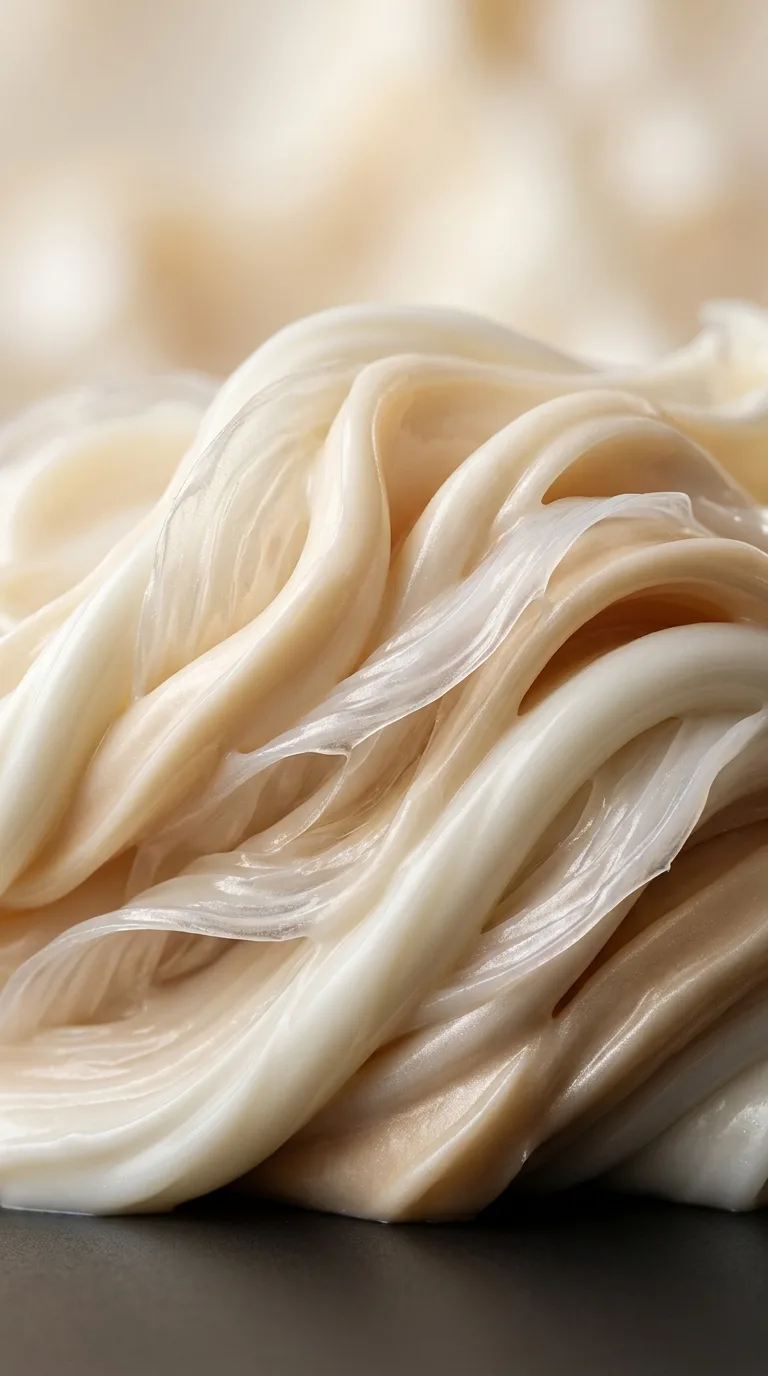
Material close-up — formulation seen through texture, sheen and light.
Sensory finish
Finish is as important as application. A serum that leaves skin tacky disrupts the sequence. A cream that sits on the surface without absorbing feels inert. The Atelier tests for the moment when texture disappears and skin simply feels composed — neither coated nor bare. This is sensory formulation: invisible when it succeeds. Finish is also optical. A surface that looks busy under quiet room light has failed even if the hand initially approved it. The house therefore judges texture twice — once in motion on skin, once at rest in atmosphere — and keeps both verdicts equally strict.
A successful texture does not announce itself. It leaves skin looking as if it were simply well considered.
Gel and essence
Gels and essences open a ritual — cooling, weightless, often the first texture after cleansing. They signal preparation: the surface readied for what follows. At FIONÉE, essences are not watered serums; they carry intention in viscosity and finish, disappearing into skin while leaving a sense of readiness. The opening gesture matters because it sets the evening’s or morning’s tempo. Too much slip and nothing that follows will hold; too much grip and the ritual begins in friction. The Atelier looks for a middle register — fluid enough to invite the next step, present enough that preparation feels like a decision rather than a rinse.
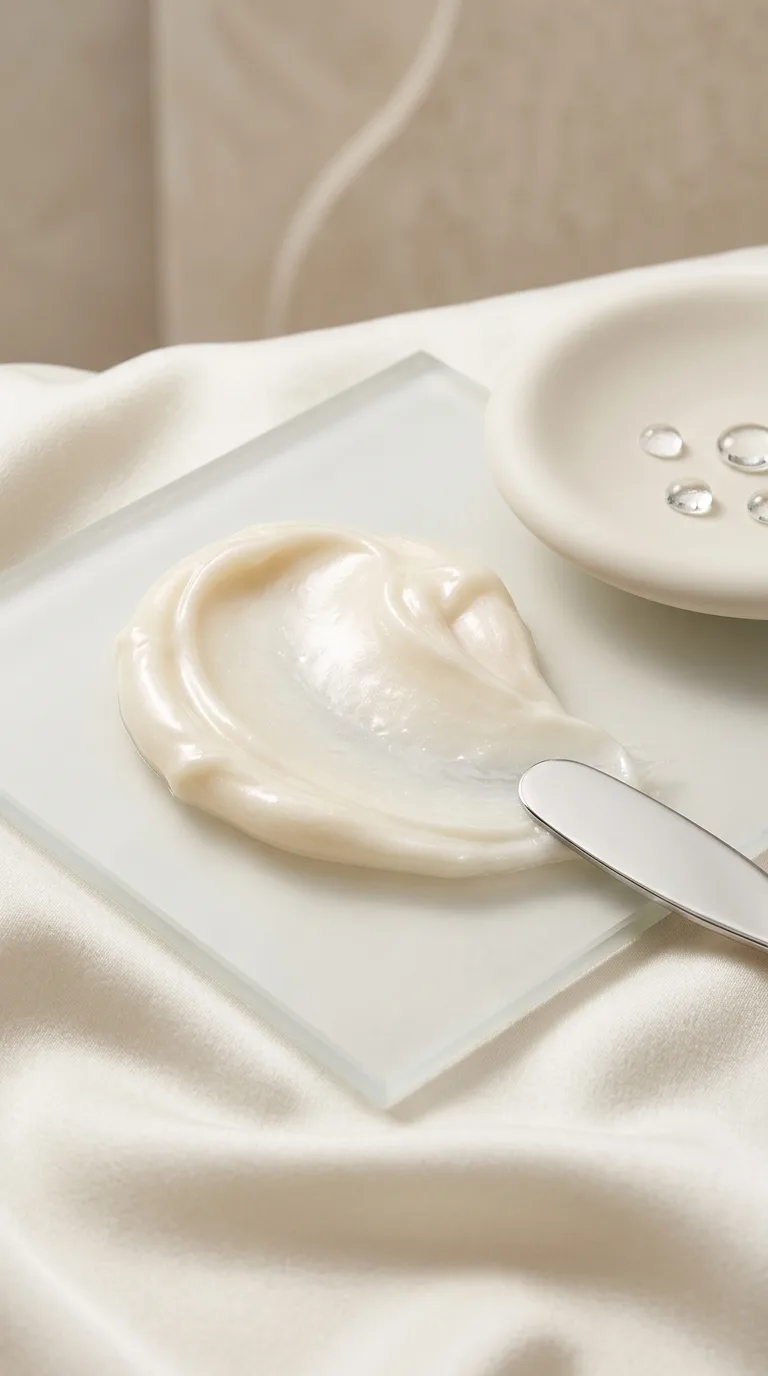
Cream atmosphere — cushion, opacity and the language of comfort.
Serum and cream
Serums concentrate delivery; creams provide closure. The contrast between them creates editorial rhythm within AURÉLIS — a pearlescent serum beside a restorative cream, a lightweight concentrate beside a mask that stays. Formulators at the Atelier argue for this contrast deliberately: texture as narrative. Narrative does not mean storybook marketing. It means the hand can feel a beginning, a middle and an end. Without that arc, rituals become stacks — products added because the shelf is full, not because the sequence requires them. Serum and cream, rightly paired, restore the arc.
Mask as sustained texture
Masks occupy a different temporal register. They are textures asked to remain — not indefinitely, but long enough to mark a pause. Within AURÉLIS, a mask may belong to recovery’s cushion or to radiance’s pearlescent preparation, yet in both cases the formulation problem is the same: how to stay without becoming a film that argues with sleep or with the next cream. The Atelier refuses mask theatre — no tingling that mistakes irritation for evidence, no peel that performs progress. A mask succeeds when the pause feels earned and the finish afterward feels continuous with the rest of the collection.
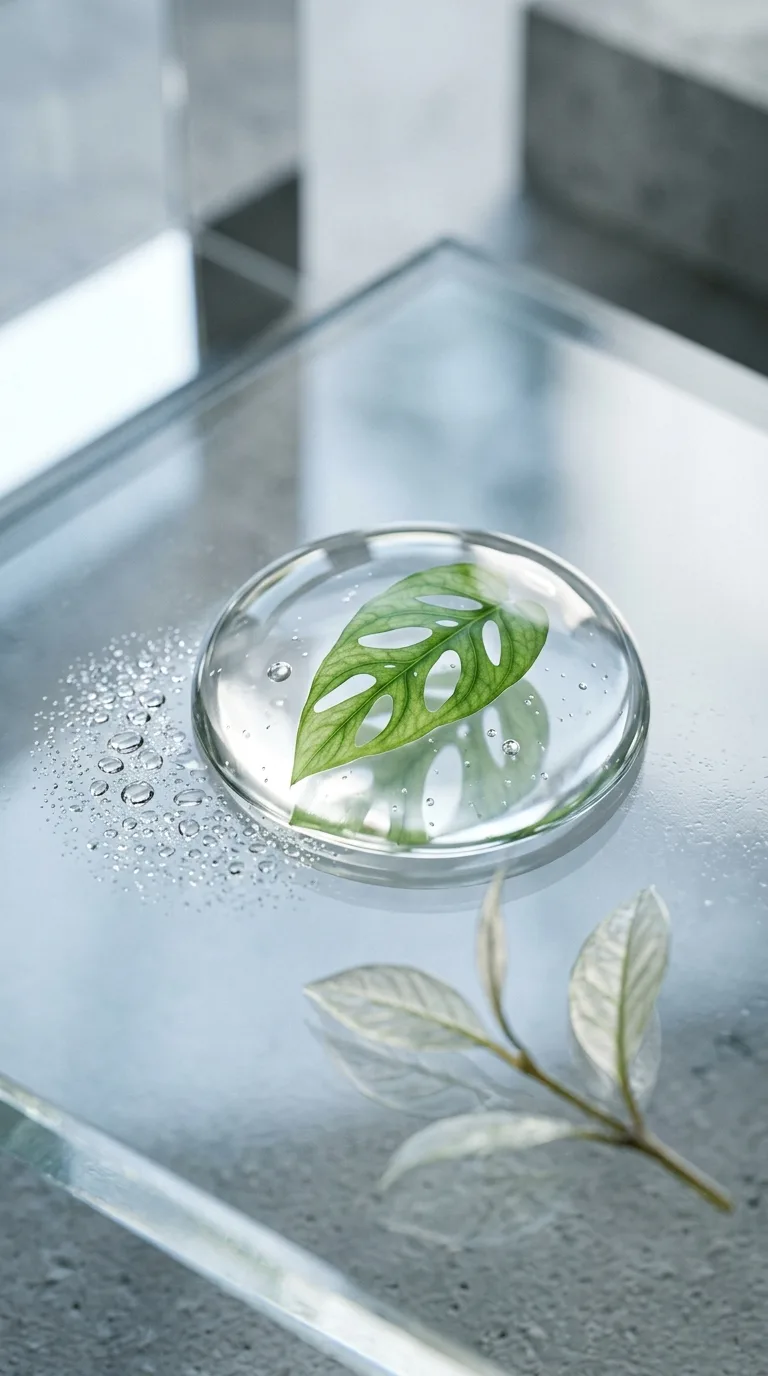
Vessel and material — texture begins before the formula meets skin.
Editorial sequence
The AURÉLIS collection is arranged as an editorial sequence of textures rather than a store grid. Contrast creates interest: a weightless essence beside a comforting mask, a pearlescent serum beside a restorative cream. Each formula is positioned for how it feels in relation to the others — a composition, not a catalogue. Visitors are not asked to collect every texture. They are invited to recognise which architecture belongs to their evening, which to their morning, which to a slower Sunday. Sequence is therefore a curatorial act: the house proposes relations; the ritual selects among them with restraint.
Why texture precedes claims
No ingredient list compensates for a texture that fails in use. FIONÉE treats formulation as culture: the pleasure of application, the intelligence of pairing, the confidence of restraint. Texture communicates what words cannot — that a formula was made to be lived with. Claims, when they appear at all, stay inside appearance and feel. Percentages are not asked to perform persuasion. The house would rather a visitor remember how a cream closed the night than recite what it contained. That preference is not anti-science; it is a refusal to let laboratory vocabulary eclipse the sensorial fact of daily use.
Testing without spectacle
In the Atelier, texture is tested in ordinary light and ordinary time — not under demonstration lamps that flatter sheen, not in a rush that hides drag. A formula may be warmed between palms, layered after an essence, left for the length of a short conversation. What the house seeks is compatibility with real evenings: makeup or bare skin, travel or stillness, a quick morning or a slow night. Spectacle testing produces spectacle textures. FIONÉE prefers the quieter verdict of a surface that still looks composed when no one is watching.
Light as the last critic
After the hand has approved a texture, light still has a vote. A finish that looks busy, chalky or overly theatrical under quiet illumination is sent back. The Journal’s interest in light as material belongs here: formulation is not complete until the surface looks composed in a room, not only in a lab. That is why AURÉLIS textures are shown in atmosphere as well as in packshot — the two views are one argument. Pearl, cream and champagne tones in the imagery are not decoration; they are the climate against which finish is judged. If a texture cannot hold that climate, it does not yet belong to the house.