
Maison
Why Sensoriality Matters
Sensoriality is often dismissed as indulgence — the unnecessary layer atop serious skincare. At FIONÉE, it is the foundation. How a formula feels determines whether it is used, remembered, and returned to. Texture is not decoration; it is argument. Maison exists, in part, to teach that argument in rooms rather than in bullet points: slower light, quieter objects, a climate in which touch is allowed to be decisive. Without sensoriality, even intelligent formulas remain theoretical. With it, care becomes a practice people keep.
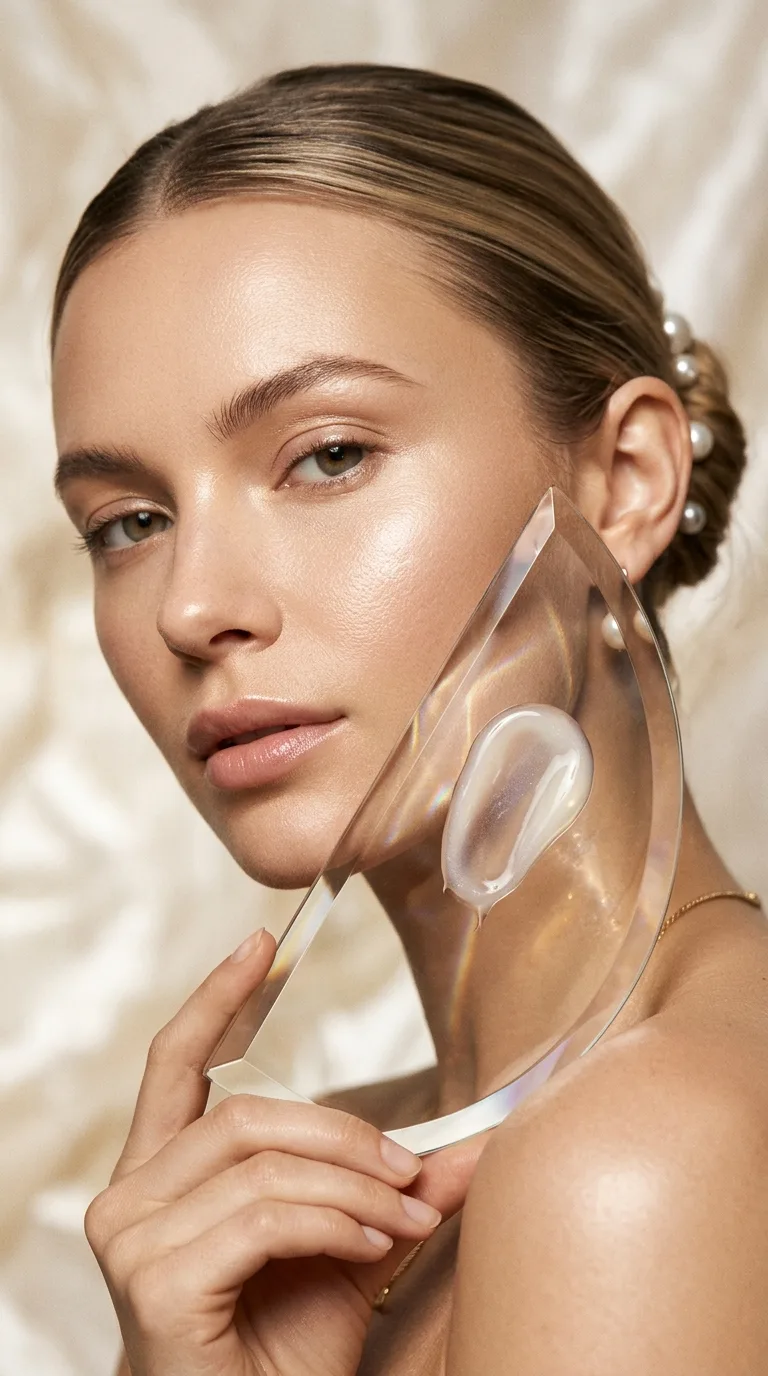
Sensoriality is how a formula earns its place — through touch, not claim.
Touch before theory
Before reading an ingredient list, the hand knows. A serum that drags, a cream that pills, an essence that evaporates without trace — each failure is sensorial, and each sends a formula back to the Atelier. FIONÉE treats touch as the primary test because daily rituals are lived in sensation, not in spreadsheets. Theory has its place in formulation discipline; it does not get to overrule the palm. A visitor will forgive a quieter claim more readily than a texture that insults the evening. That hierarchy — touch first, explanation second — is how the house stays inhabitable.
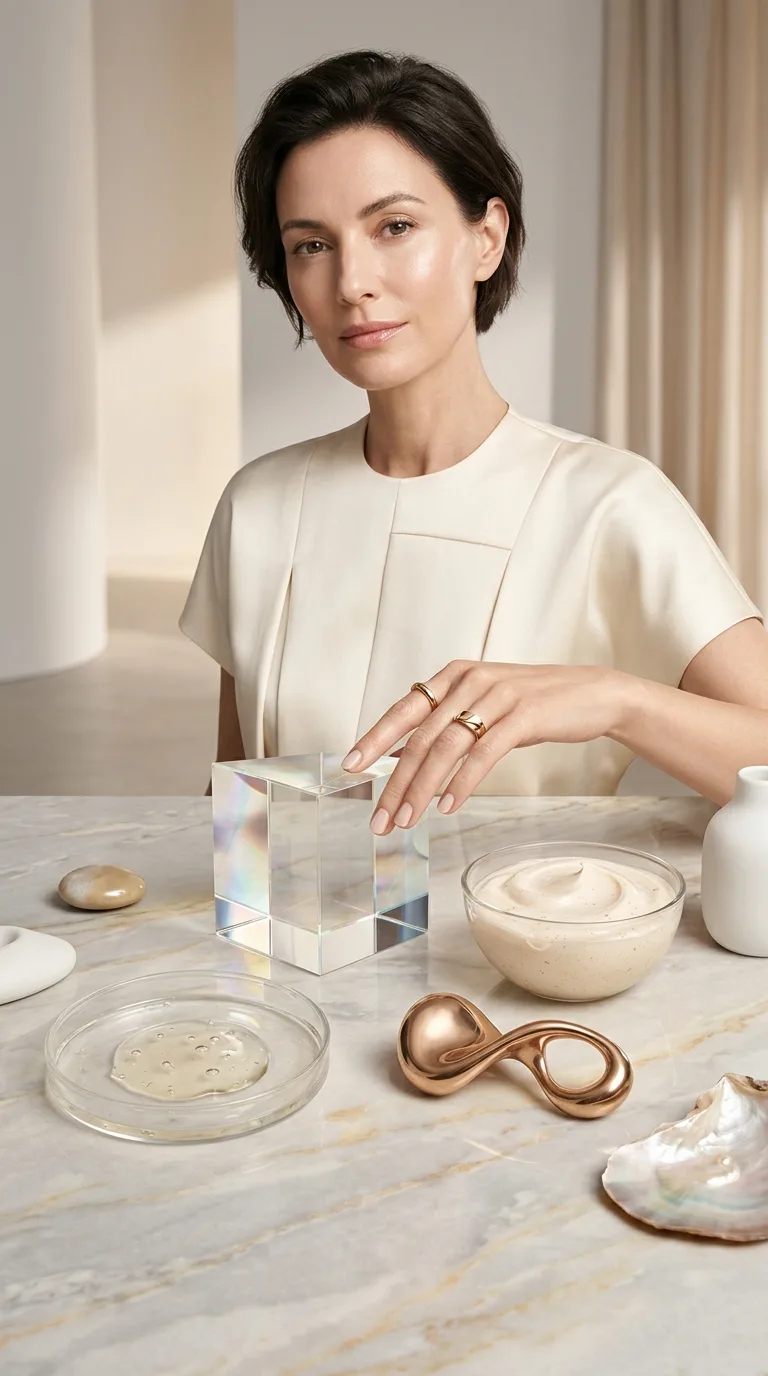
The sensorial register — light, material and editorial calm held in one frame.
Scent-neutral, experience-rich
FIONÉE favours a clean, scent-neutral experience — not because fragrance is forbidden, but because texture should lead. Application rhythm matters: the cool of an essence, the glide of a serum, the press of cream into skin. These moments accumulate into a ritual identity that no marketing copy can manufacture. Scent, when too assertive, becomes a competing narrative. The house prefers the quieter story of finish and pacing: how quickly a texture settles, whether the surface feels composed, whether the next gesture still has room. Experience-rich does not mean overloaded. It means each sensation is intentional and none are noise.
Pleasure in use is not frivolous. It is what keeps a ritual alive long enough to matter.
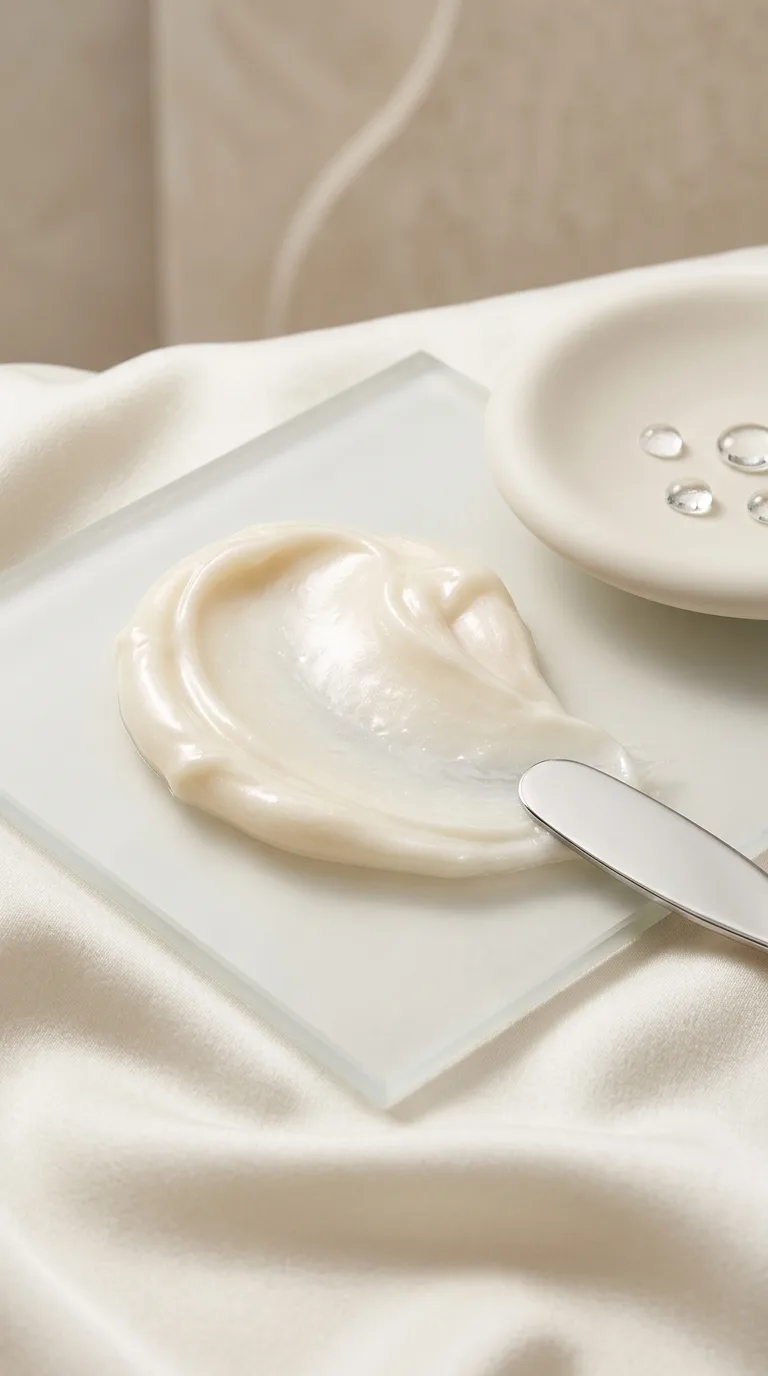
Cream texture atmosphere — cushion, finish and material pleasure without spectacle.
Material pleasure as principle
A beauty maison must offer pleasure — not extravagance, but the quiet satisfaction of a well-made object used well. FIONÉE packaging, texture and application are designed for this pleasure: the weight of a jar, the precision of a dropper, the way light catches a pearlescent finish. Sensoriality extends from formula to object to ritual. Pleasure here is disciplined. It does not arrive as excess product, loud fragrance or theatrical packaging. It arrives as rightness: a lid that closes cleanly, a viscosity that matches the hour, a finish that looks composed under the same light Maison uses in its editorial rooms.
Rhythm and return
Sensorial pleasure encourages return. A formula remembered for how it felt yesterday is a formula used again today — and that continuity is the only sustainable path to the appearance benefits cosmetic care can offer. FIONÉE designs for this return: textures that do not fatigue, finishes that do not compete, rituals that feel complete in three considered steps rather than seven obligatory ones. Return is the opposite of novelty chasing. The house would rather a cream become familiar in the best sense — trusted, awaited, sufficient — than reinvent the evening every week with a new sensation that cannot hold.
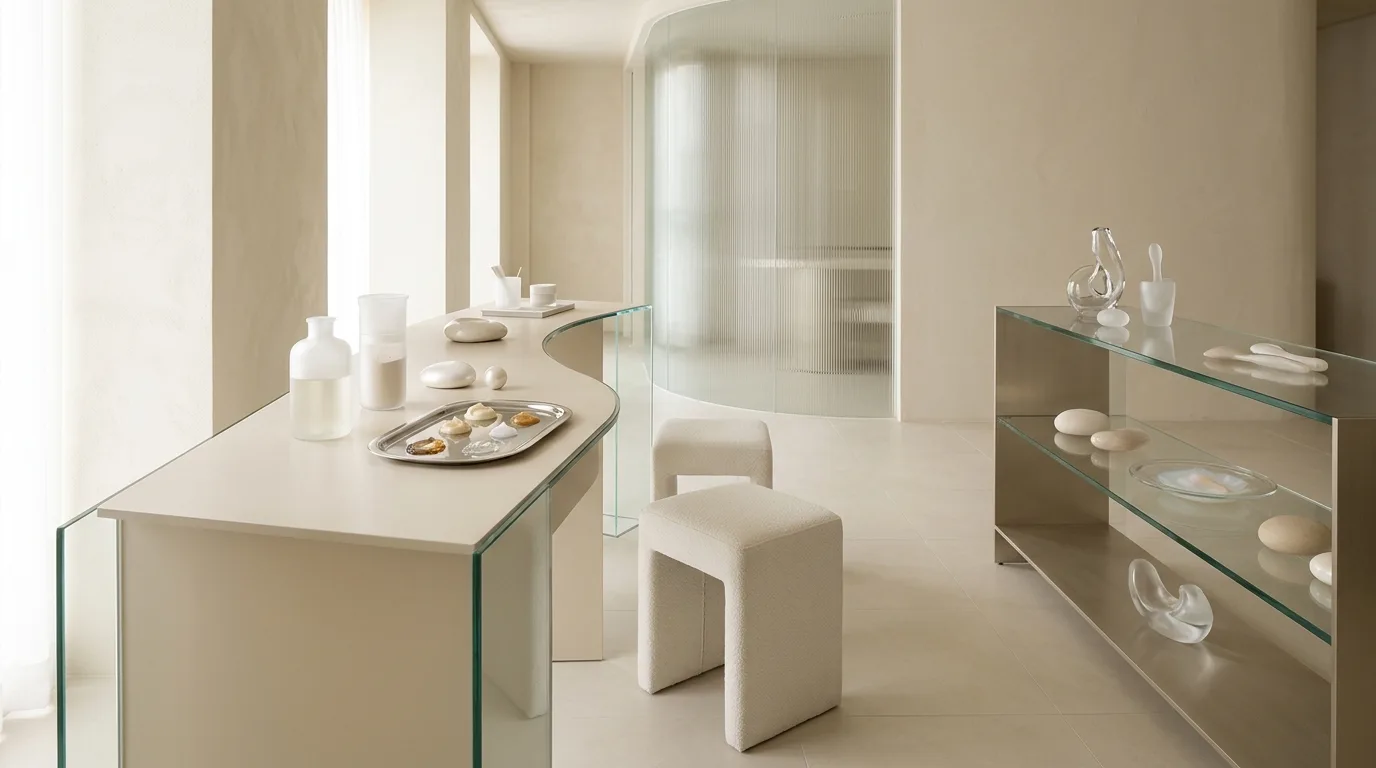
Maison as sensorial frame — rooms that teach the pace formulas were designed for.
Object and ritual
Sensoriality extends to object design — the weight of packaging in the hand, the sound of a cap closing, the clarity of a dropper. FIONÉE treats these details as part of the formulation story: a formula is not only what is inside the vessel, but how the vessel meets the ritual. An object that fights the hand breaks the tempo the Atelier spent months refining. An object that disappears into use — metering cleanly, opening without fuss — lets texture remain the protagonist. Packaging, in this sense, is not a billboard. It is an instrument for evening and morning attention.
Maison as the sensorial frame
Sensoriality does not stop at the formula. Maison holds the climate in which textures are meant to be used: slower rooms, quieter light, fewer competing objects. A cream applied in that register feels different from the same cream rushed at a sink. FIONÉE cannot choreograph a visitor’s bathroom. It can insist that the brand’s public rooms — Maison, Journal, Atelier — teach the same pace the formulas were designed for. The Journal’s essays, the Atelier’s restraint, the collection’s atmospheres: each is a lesson in how touch should be allowed to matter. Maison is where that lesson becomes spatial.
Light, sound and the edges of attention
Sensorial skincare includes more than viscosity. Light decides whether a finish looks refined or restless. Soft sound — a jar, a pump, a quiet room — decides whether application feels like care or like administration. FIONÉE’s imagery returns to pearl, champagne and optical calm because those climates flatter honest textures and expose dishonest ones. The house does not design for spectacle lighting that forgives chalk or glitter. It designs for the rooms people actually inhabit. Attention has edges; sensoriality respects them by refusing to fill every sense at once.
Why it matters — without hard sell
Products that feel exceptional are used consistently. Consistency is the only path to the appearance benefits cosmetic skincare can offer. FIONÉE does not need to state this as a commercial equation; the formulations demonstrate it. Sensoriality is therefore not soft positioning — it is the most practical intelligence a maison can hold. No hard sell follows from that intelligence. Commerce remains elsewhere. What the brand site offers is the culture that makes use desirable: textures worth returning to, rooms that explain why, language that never confuses pleasure with persuasion.
A discipline, not a luxury add-on
Calling sensoriality foundational is a discipline. It forces the Atelier to reject formulas that only succeed on paper. It forces the Journal to describe feel with the same seriousness as philosophy. It forces Maison to keep empty space so that touch has somewhere to register. Luxury, in the cheap sense, piles sensation on sensation. FIONÉE’s sensoriality edits. What remains should feel inevitable: a short ritual, a composed finish, an object that behaves, a house that still believes the hand is the first and last critic.