
Philosophy
Light as Editorial Material
Light is the first editor. Before a formula is named, before a ritual is composed, light decides whether a surface looks composed or merely bright, whether a cream reads as cushion or as glare, whether a room feels inhabited or staged. FIONÉE treats light as material — something to be arranged with the same restraint given to texture.
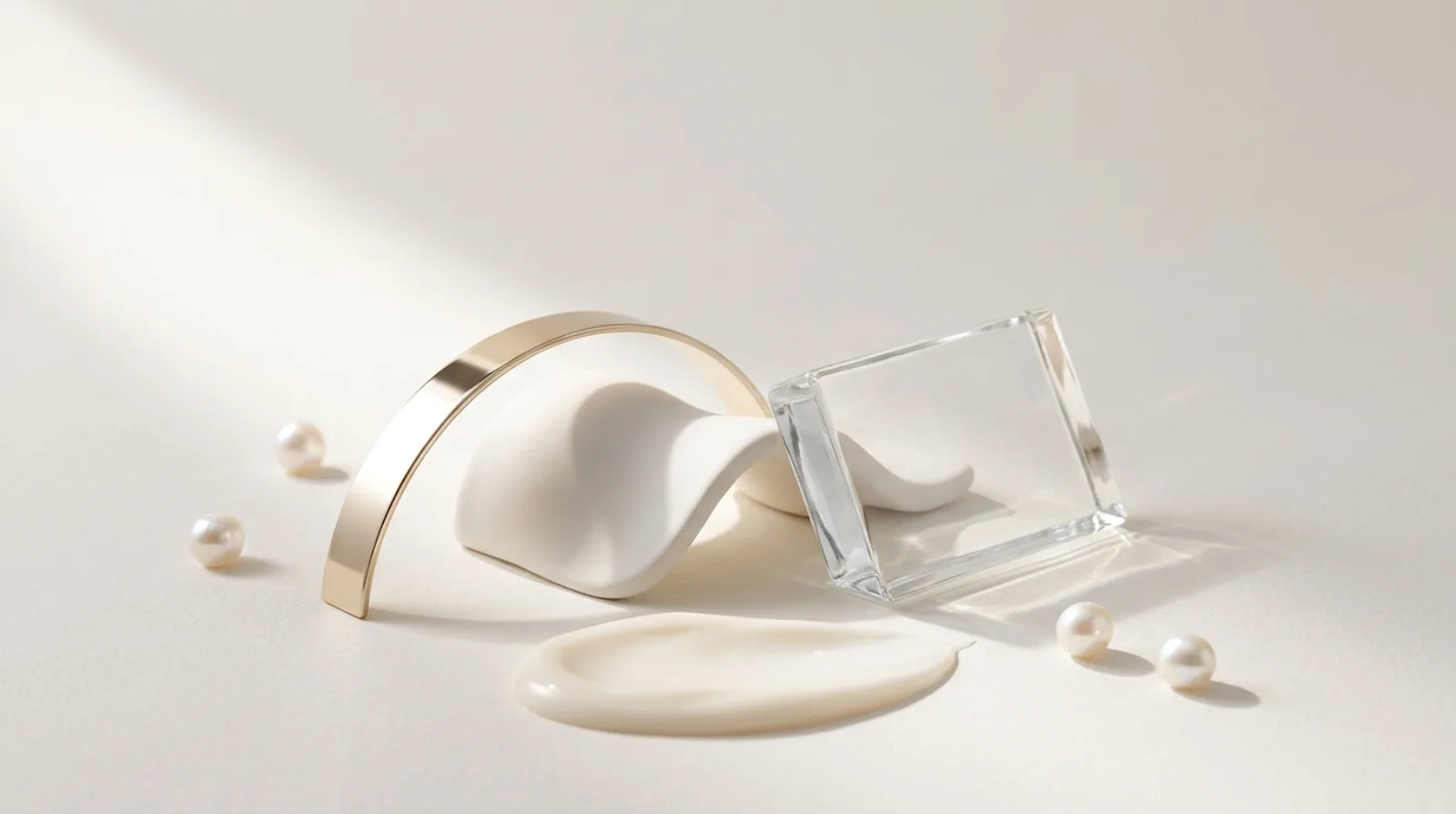
Radiance is not brightness. It is light meeting a surface that has been prepared.
Light on skin
Cosmetic luminosity is often mistaken for shine. FIONÉE is interested in a quieter return of light: the evenness that appears when a surface is hydrated, refined, and left unforced. Pearlescent finishes are calibrated so they catch illumination without becoming a costume. The goal is not to look lit. It is to look ready for light — the difference between a filter and a prepared complexion. That readiness is optical and tactile at once. Skin that feels composed tends to receive daylight more kindly; skin that has been overloaded tends to scatter it. The house therefore judges radiance by how light settles after application, not by how loudly a finish announces itself in the first second.
Light as material — cream, pearl and champagne metal under quiet illumination.
Light on texture
A serum and a cream do not receive light in the same way. Aqueous textures tend to disappear, returning the skin as the only plane. Richer emulsions hold a slower highlight, a brief champagne edge before they settle. The Atelier watches this moment as closely as it watches spreadability. If a texture looks busy under light, it is not finished — regardless of how complete it feels in the hand. Finish is an optical verdict as much as a sensory one: chalk, flash, and theatrical sheen are declined for the same reason as tack — they interrupt the surface the house is trying to keep calm.
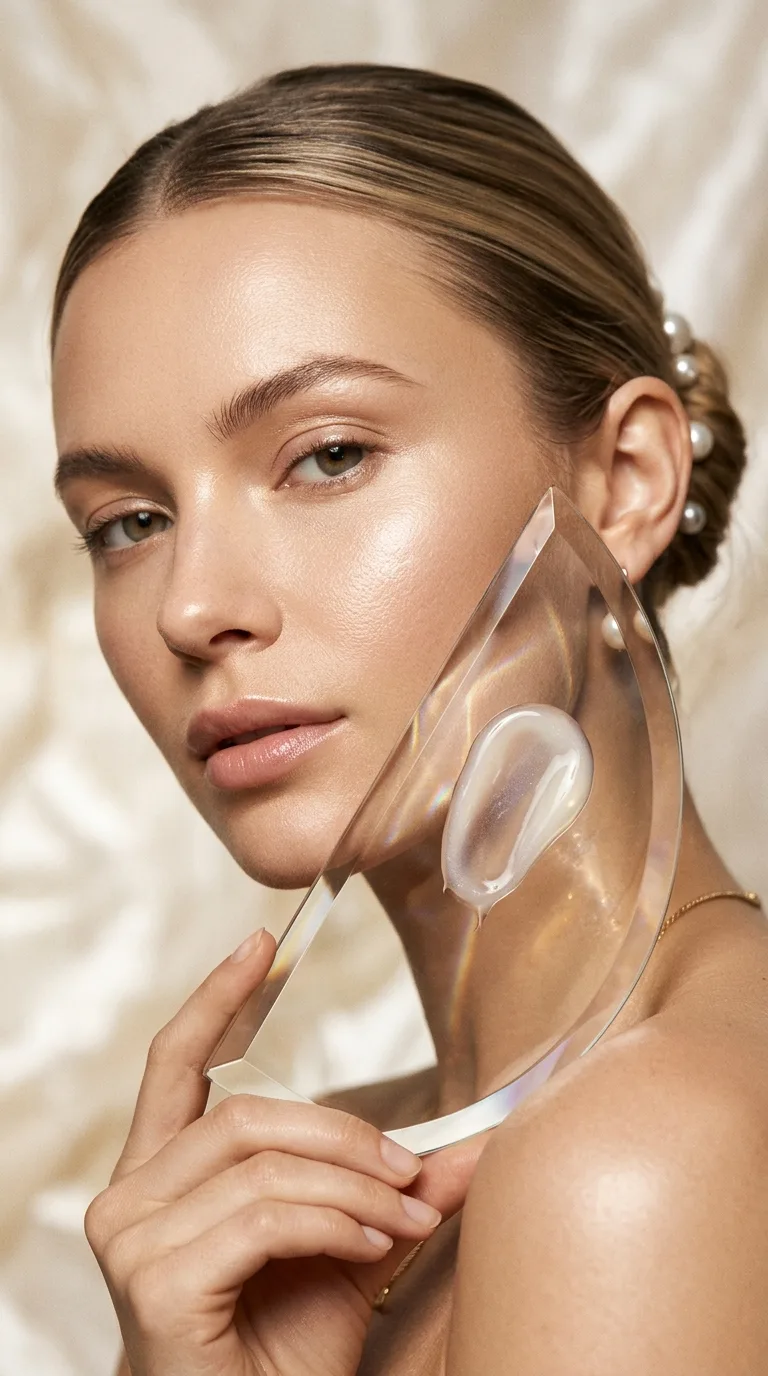
The radiance register — light as atmosphere rather than effect.
If a texture looks busy under light, it is not finished.
Light in rooms
Maison and Journal borrow their lighting grammar from the same house: soft ivory planes, silvered reflections, enough shadow to give objects weight. Harsh beauty lighting is refused because it turns skincare into demonstration. FIONÉE prefers rooms that could be lived in — windows implied rather than shown, highlights that feel architectural, darkness used as rest rather than drama. In those rooms, cream and pearl are allowed to behave as materials. They take light slowly. They refuse the clinical glare that flattens texture into a sales proof. Atmosphere is not decoration here; it is the condition under which the formulas are allowed to be seen.
Photography as discipline
Editorial stills in this universe are not illustrations of claims. They are studies of how materials behave: glass, porcelain, water, fabric, the faint optical depth of a well-made emulsion. Product appears when it has authority to appear. Atmosphere appears when the house needs climate. Neither is asked to impersonate the other. Light is the continuous thread — the reason the pages feel related without repeating the same picture. A photograph that over-explains radiance usually fails; one that simply places a surface in honest illumination often succeeds. The camera, like the formula, is edited by what it declines to force.
Ritual as a lighting sequence
A daily sequence can be read as a change of light. Morning favours preparation: essences that ready the surface for the day’s illumination. Evening favours absorption: textures that settle as the room dims. FIONÉE does not romanticise this into a programme. It simply notices that rituals have hours, and that those hours have different optical needs. The Ritual Composer is a map of concern; light remains the unnamed companion of every step. Chosen well, a sequence leaves the complexion looking receptive rather than coated — ready for daylight or lamplight without asking either to perform.
What light is not asked to do
Light is not asked to prove efficacy. It is not asked to dramatise a before and after. It is not asked to make a formula look more expensive than it is. FIONÉE uses illumination the way a good interior uses it: to reveal material honestly, to give the eye a place to rest, and to keep the house from shouting. That is an editorial ethic as much as a visual one. When light is treated as material rather than marketing, radiance stays a quality of surface — cosmetic, quiet, and earned by preparation rather than by glare.